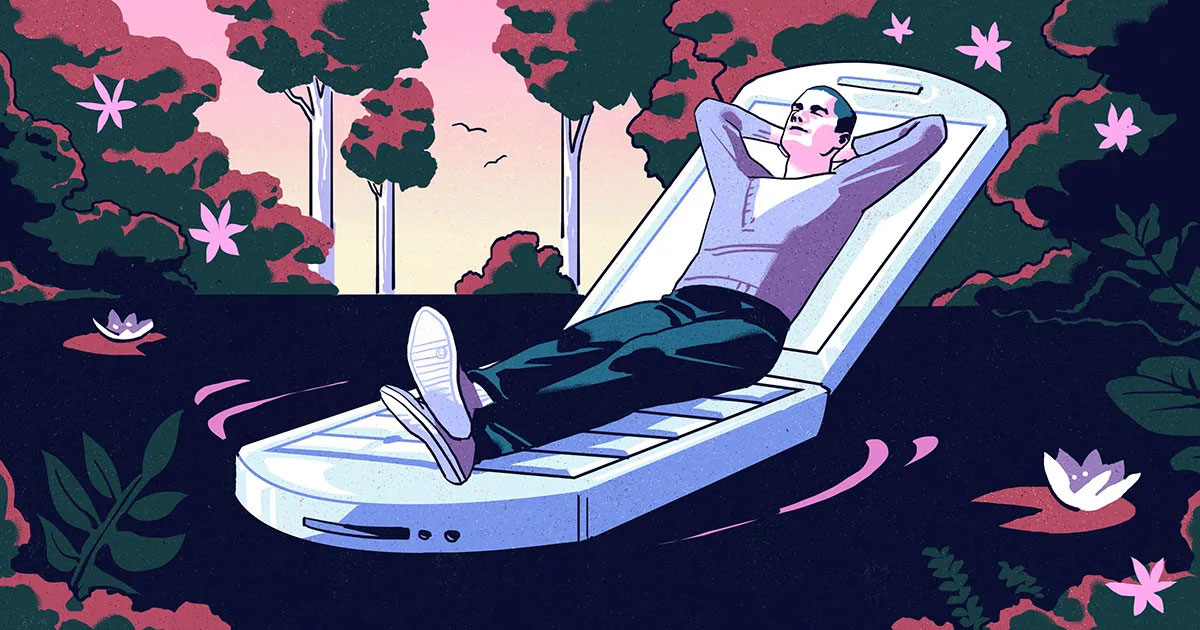

“Imagine a device as powerful as a calculator,” Steve Jobs never once said while standing on a dimly lit stage. He also never took a flip-phone out from his jean pockets before asking us to gaze into the past.
Yet, had Apple’s former CEO ever announced, “Our new device can make and receive calls,” it might have gone over shockingly well in 2026.
While Americans are more addicted to their phones than ever, a quiet rebellion is growing. Even as smartphones evolve and assimilate into daily life, many people are deliberately ditching smartphones for devices that do far less: phones stripped of apps, algorithms, and the relentless pull of the feed.
In other words, they’re choosing “dumb phones.”
- What’s a Dumb Phone?
- The Rise of the Dumb Phone Trend
- Meet The Devices Driving The Disruption
- The Data Behind The Dumb Phone Trend
- The Dumb Phone Community
- Smartphone Alternatives Beyond Dumb Phones
What’s a ‘Dumb Phone’?
A dumb phone is just what it sounds like, a “dumbed down” mobile device designed to do fewer things.
With a name that’s more playful than literal, a dumb phone isn’t so much “dumb,” as it is deliberately limited. And, the phrase “dumb phone” (or “dumbphone”) can represent more of a movement than a specific device. That movement isn’t limited to dumb phones alone – “dumb technology” can include apps and other physical devices that help users reduce their digital dependence.
Though each phone or app (used to block other apps, incidentally) may have differing designs, each has roughly the same objective: to limit on-screen functionality, often featuring only basic capabilities like calls, texts, and a handful of utilities.
You could consider dumb phone technology as less of a downgrade, and more of an intentional opt-out.
How many people have them?
Stepping “back in time,” in 2011 only 35% of U.S. adults said they owned a mobile phone, according to a PEW research study.
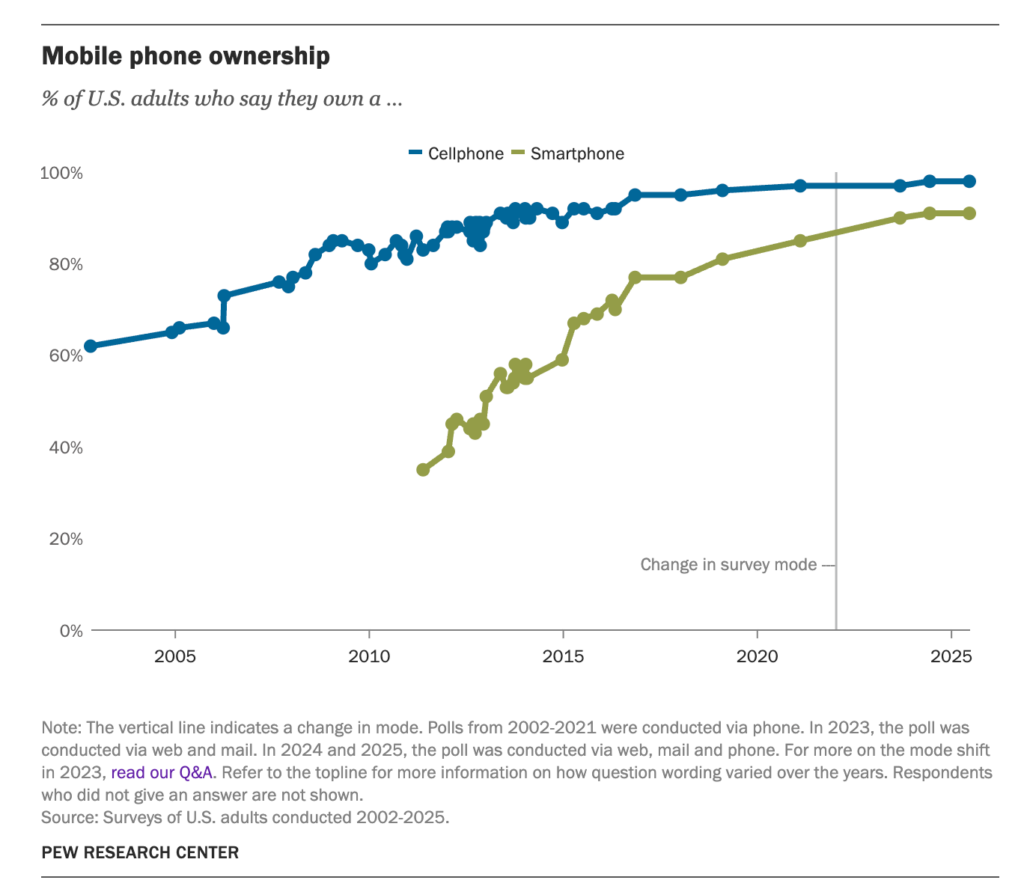
That number now sits at a consensus-rate of 98% of U.S. adults. Of those, 91% said they owned a “smartphone.”
Despite that adoption rate, 58% of U.S. smartphone users say they use their phone “too much,” up substantially from 39% in 2015.
Why ‘dumb phone’ dialogue is now resurfacing
The phrase “dumb phone” originally appeared during the early smartphone boom, when app-powered devices began replacing traditional mobile phones. For years, “dumb phones” mostly described older technology that hadn’t yet been upgraded.
Now the connotation has shifted.
Today the conversation is closely tied to digital balance.
Right now, 41% of U.S. adults say they are online almost constantly, including 63% of adults ages 18 to 29.
The smartphone made consistent connectivity possible, but that same connectivity has reshaped how people experience time, attention, and rest.
For some people, a phone that can only call and text disrupts a system designed for endless engagement.
And that disruption can feel like relief.
Meet the Devices Driving the Movement
The major phone players have not been shy about marketing specialty phones during this resurgence of low-capability devices.
Yet even apart from them, a new category of intentionally straightforward (and sometimes surprisingly pricey) devices are plentiful. Here’s just a few:
The Light Phone
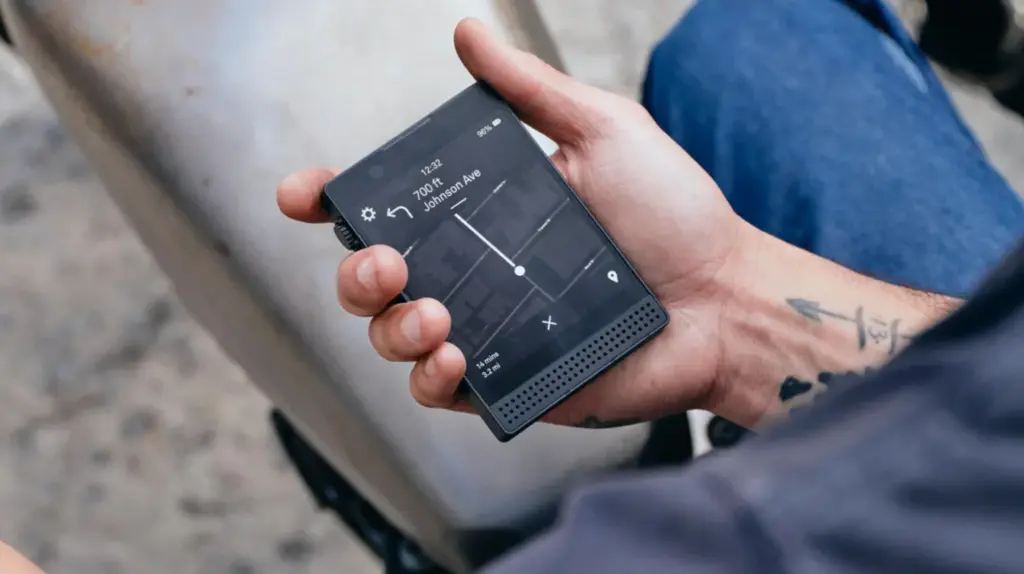
On the market for over nine years, its latest models have 5G capabilities and a striking black-and-white GPS map mode. Its matte finish looks and feels like science fiction from a parallel world where the internet was never invented. Currently priced at $699… not that far off from many Android and iPhone models.
“$699 is not a huge investment (to) get hours of your time and attention back,” points out Kaiwei Tang, Founder of “Light” (the Light Phone’s development team).
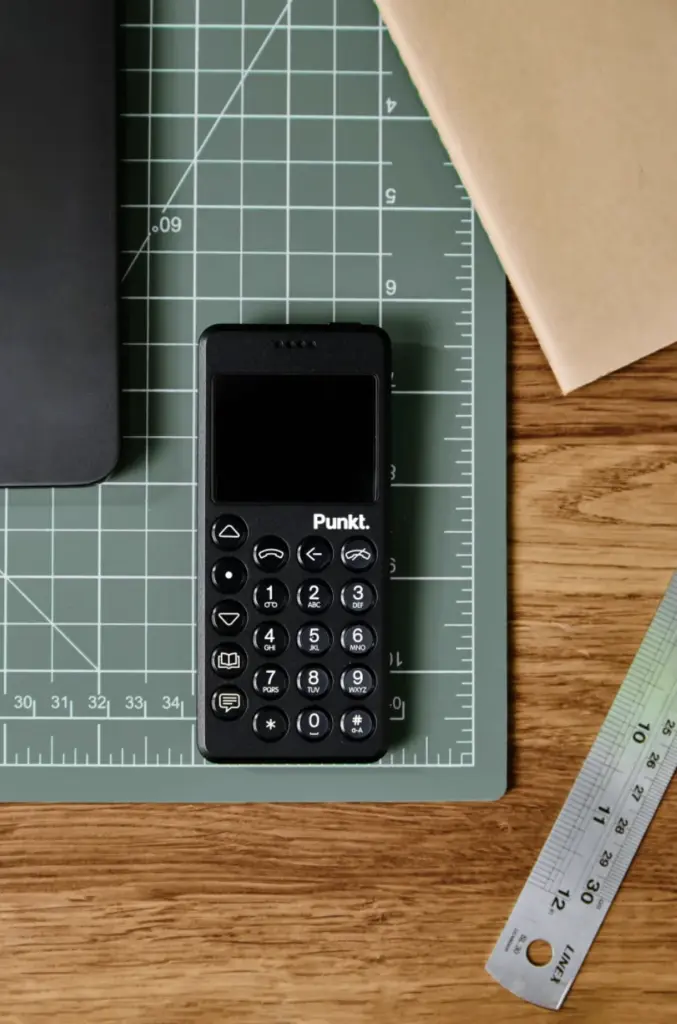
The Punkt
A lo-fi, high-end device with a retro 1970s design aesthetic and a dedicated following. Priced between $229–$299.
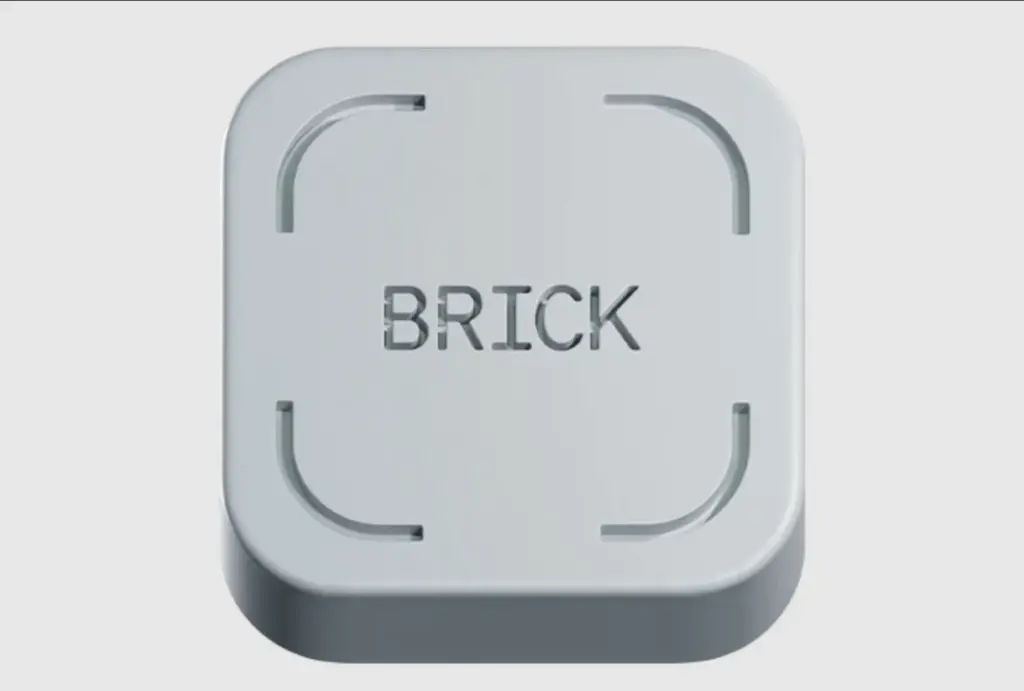
The BRICK
A physical accessory that lets you digitally customize which smartphone features are disabled and for how long, until you physically tap your phone against it to re-enable them. The idea: store it away, or hand it to someone else to monitor. Similar products include Bloom and Unpluq.
Even with the ironically higher price points, an enthusiastically paying market is on the rise, eager for phones untangled from everything-in-one devices.
Buyers are seeking freedom… and they’re paying big prices for it.
The Data Behind the Dumb Phone Trend
Whatever the intent, the umbrella trend for people simply searching the term “dumb phone” has roughly quadrupled over the past five years.
What the search data shows
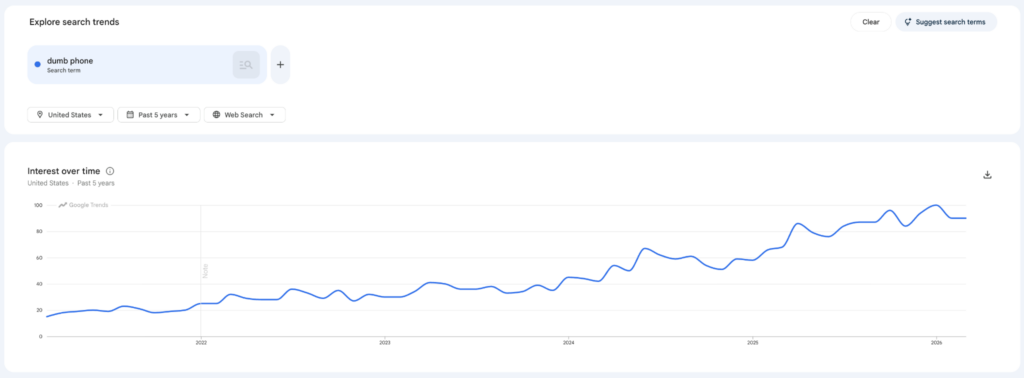
Google Search Trend Query – March 2026
Online search behavior can signify major cultural shifts. Increases in related search terms like “digital detox” and “minimalist phone” tell a similar story – sizeable swaths of people aren’t necessarily shopping, they’re searching for help.
Mental health and burnout
At first glance, the dumb phone movement might sound like something driven by people who never fully embraced smartphones. In reality, the opposite pattern is emerging.
While countries like Australia have famously banned social media outright for children under 16, Americans have largely had to fend for themselves within an environment that hyper-accelerates phone usage. (And that’s before considering the data-mining economy and the AI chatbot boom: a health and ethics story that is still being written.)
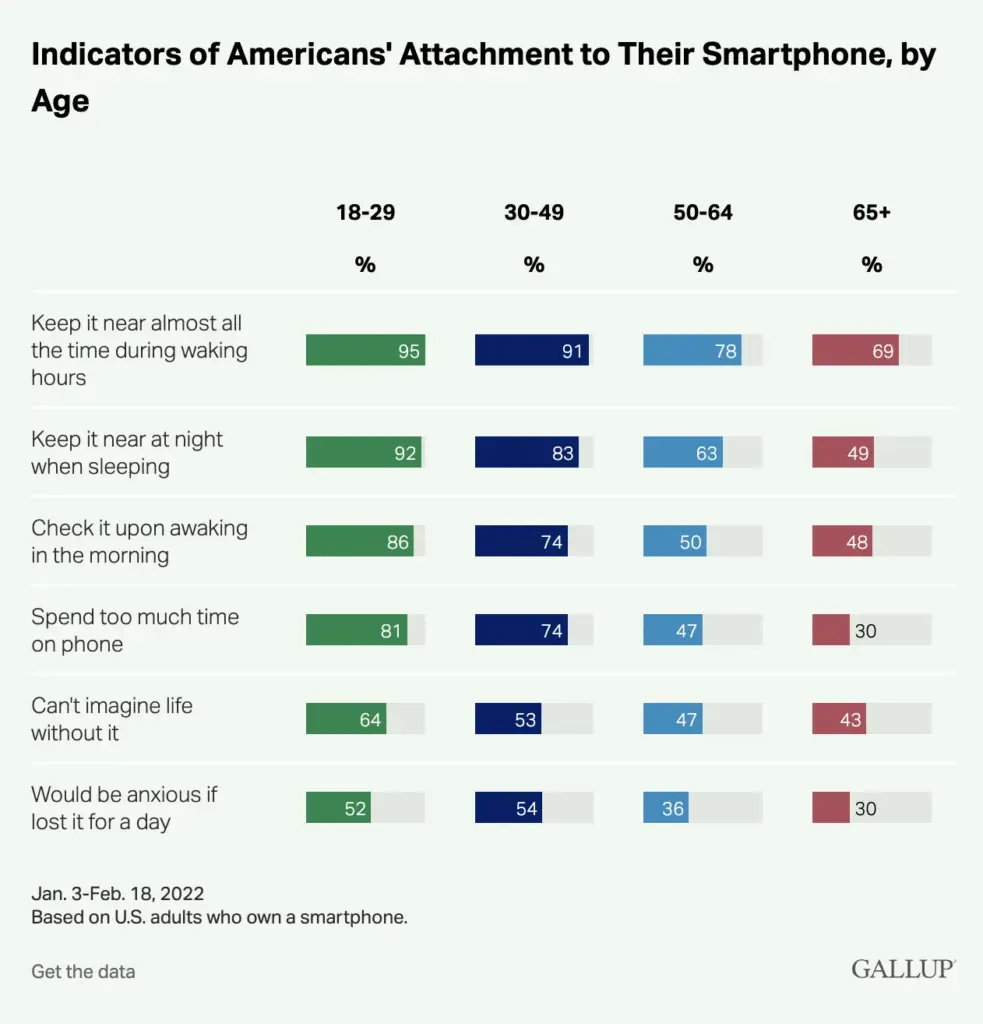
According to a Pew Research report, 63% of adults ages 18–29 say they are online almost constantly. Teenagers experience an even more intense digital environment: nearly all U.S. teens have access to a smartphone, and many report being online throughout most of the day.
The youngest generation faces the most vulnerability to smartphone-related health decline, according to endlessly mounting research surrounding persistent smartphone use. Many teenagers report feeling stress or anxiety associated with their digital lives, even while recognizing the benefits of connection.
Paralleling their fascination with Y2K-themed fashion and low-fi tech however, Gen Z is diverging from it’s digital dependence, despite this chronic attachment to devices. Leading the dumb phone charge (so to speak) 16% of Gen Z adults say they own a dumb phone, with Millennials following next.
Could the dumb phone disruption turn the tide in tech-related health and well-being for Gen Z, and the larger population?
The Dumb Phone Community
Nestled atop the pinned post on the most popular subreddit for dumb phones (naturally titled “r/dumbphones”) sits a bold warning: “There is no perfect dumbphone.”
Here, people are discouraged from one-and-done solutions. Built as something of an online support group, this niche corner of the internet is a place where one can pursue piecemeal strategies, personalized solutions, and an online community of like-minded people.
While consciously deciding to detach and decouple from their “everything devices,” this empathic community is multiplying rapidly.
“Customize or compromise” is the group’s credo – customize your smartphone to reduce distracting apps, or compromise by foregoing built-in smartphone conveniences with a feature or basic phone instead. Posters share their own “dumb tech” reviews, personal stories, affirmations, and resources to aid each others’ journey toward digital independence.
Membership has grown to five times its size from a couple years ago, with 50,000 people now posting to it daily (presumably, not so frequently from a smartphone).
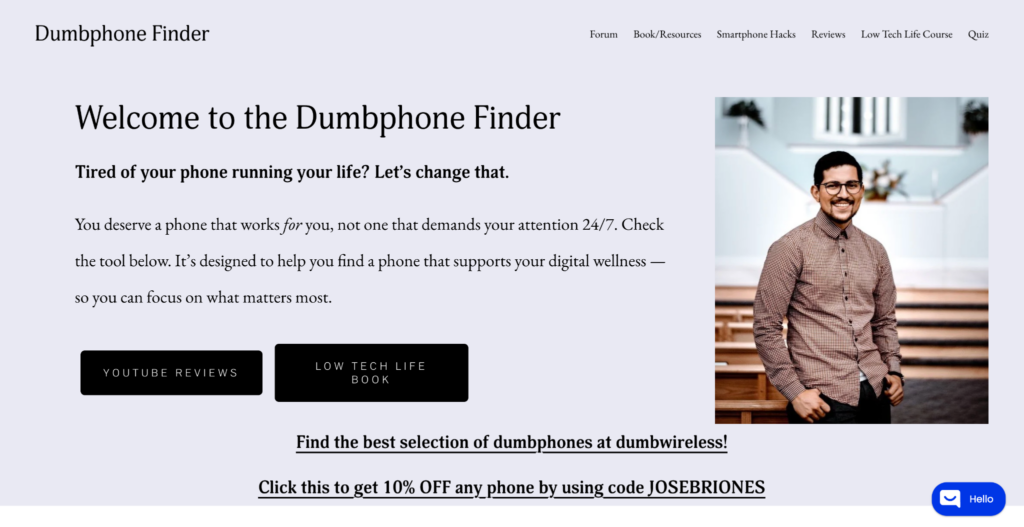
Among the community’s most proliferated resources is what’s called the “The Dumbphone Finder,” an old-school website run by a moderator of the dumbphone Reddit community, Jose Briones.
Here, there are old-school forums, lifehacks, and book recommendations. The community ethos: begin chipping away at mobile phone usage exactly where you currently sit mentally. Blocking apps, dumb phones, and other cold-turkey solutions are treated as tools, not solutions.
Briones’ YouTube channel of supportive techniques, reviews and more currently has over 40,000+ subscribers, all with the hope of helping people get “dumber.”
Smartphone Alternatives Beyond Dumb Phones
Outside of phone usage and behavior changes, many people are quietly taking back their time and attention in other ways.
Landlines, VoIP, and virtual numbers
For those who still need to remain reliably reachable, despite the great “landline decline,” significant populations are purposefully choosing to maintain a traditional landline.
Others use internet-based calling services or virtual phone numbers that allow calls and texts to route digitally rather than through a physical device.
App blockers and restricted modes
Not ready to fully forsake the smartphone? These “halfway” alternatives are gaining traction and popularity:
- App blockers (e.g., “Freedom,” “Opal,” and “Screen Time”) limit access to high-distraction apps.
- Focus modes and “Do Not Disturb” functions can reduce notification interruptions.
- Physical accessories (like the “BRICK”) enforce digital limits more directly.
Decoupling your phone number away from your device
By U.S law, your telephone number belongs to you, not your carrier.
Over the past several years, services have emerged that allow phone numbers to exist independently from a specific device or traditional carrier. Instead of remaining permanently attached to one phone, a number can be stored digitally, routed between devices, or temporarily parked while someone explores a different setup.
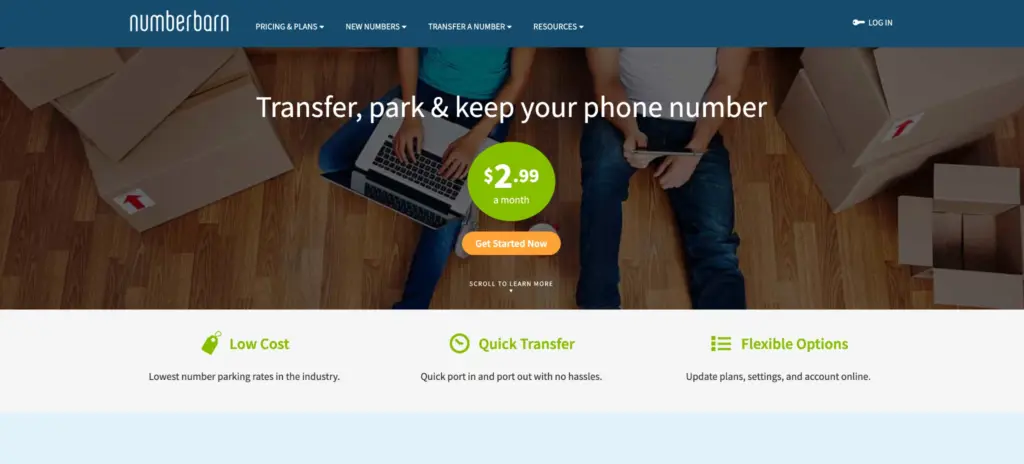
NumberBarn, for example, lets you port your number out of a carrier plan and park (store) it, for as long or as little as you want. Or you can use it like a virtual number. Should you want to temporarily disconnect altogether, or just experiment with the dumb phone life, you don’t have to sacrifice the number you’ve had for years.
Maybe Just, ‘Phone’
The smartphone has changed the way we communicate. More so, it has colonized how we experience boredom, rest, and waiting… basically, any moment that used to just be a moment.
But the future of smartphones may not be dictated by how fast and multi-faceted they can become, afterall.
Whether you’re investing (or divesting) in a new phone, contemplating the dumb phone life, or just watching this cultural phenomenon from afar, you get to decide how you want your phone to interact with your life.
___
Illustrations by Jovana Mugoša