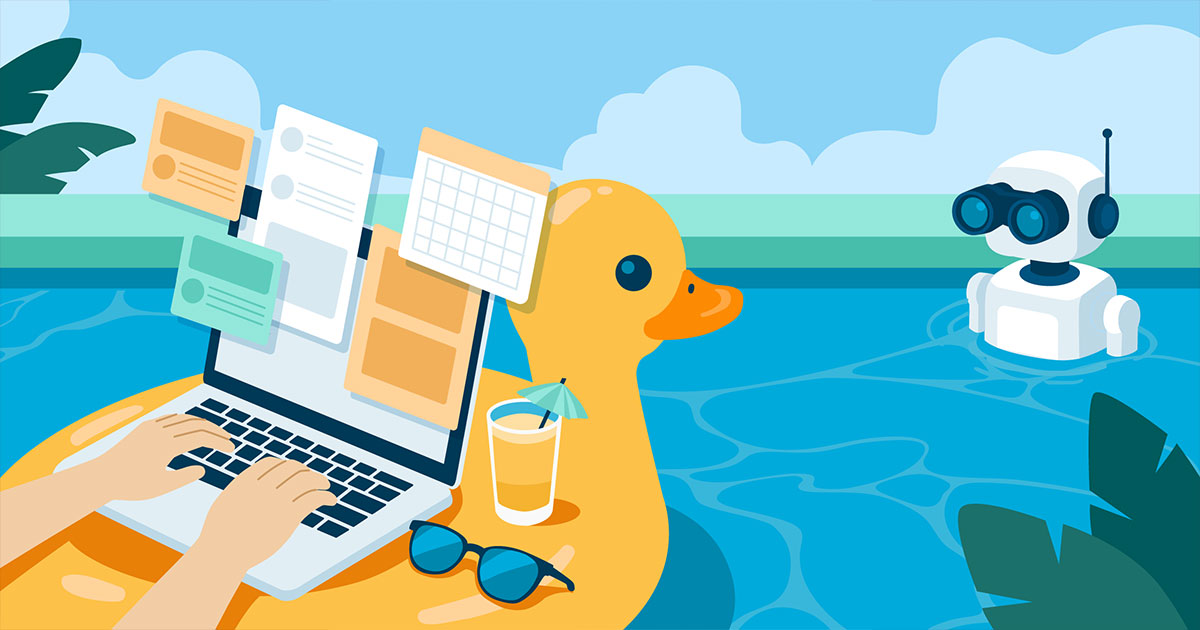

Visions of palm trees, tropical breezes and crystal waters may now come with a concerning caveat. “Will my vacation leave me replaced by AI?” A new nationwide survey by NumberBarn finds that many employed Americans not only struggle to fully disconnect while on vacation, they now worry about what’s potentially awaiting them when they return.
Workers also report putting in extra hours before vacation, logging back on before their trip officially ends, and even secretly working while they’re away. For many, time off now entails finding ways to stay connected without anyone noticing.
- Why Americans Say They Can’t Disconnect on Vacation
- Is AI Making Workers Afraid to Take Vacation?
- Company Culture and the Pressure to Stay Connected
- Hybrid Workers Have the Hardest Time Disconnecting
- Paid Time Off Isn’t Always Time Off
Key Findings
- 26% of surveyed American workers now worry that taking vacation could make them appear more replaceable, because AI can continue performing work while they’re away.
- 62% checked or responded to work emails, calls, or messages on their most recent vacation.
- 76% say they’ve felt like they needed another vacation immediately after returning from one.
- 66% used PTO to stay home and “bed rot” because they needed a mental break.
- 32% admit they have secretly worked while on vacation without telling family, friends, or travel companions.
Why Americans Say They Can’t Disconnect on Vacation
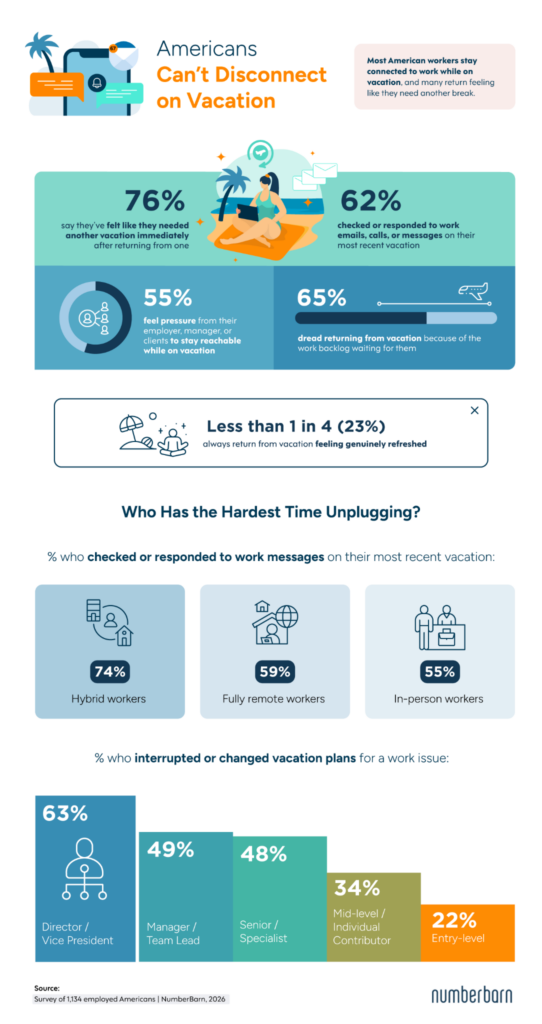
While 86% of employed Americans surveyed say they’ve taken at least one vacation within the past year, disconnecting from work has become increasingly difficult. Answering messages on the plane or while lounging by the pool appears to have become the “new normal” vacation behavior of the employed.
In fact, the majority of workers don’t even attempt to disconnect. Nearly two-thirds (62%) checked or responded to work emails, calls, or messages during their most recent vacation, including nearly one-third (32%) who say they did so multiple times each day.
And that constant connection appears to come at a cost. Less than one-quarter of workers (23%) say they always return from vacation feeling genuinely refreshed, and only one in four (25%) say they come back feeling about the same as before they left, or even more stressed.
For many workers, the pressure begins well before the trip itself, and then extends after it finishes. Six in 10 (60%) say they regularly put in extra hours before taking vacation to prepare for the time away, while 40% admit they’ve started working before their vacation officially ended just to get ahead of the backlog waiting for them. It’s perhaps no surprise, then, that 65% say they dread returning to work after vacation, including nearly one in five (18%) who say that feeling hangs over the end of every vacation they take.
Is AI Making Workers Afraid to Take Vacation?
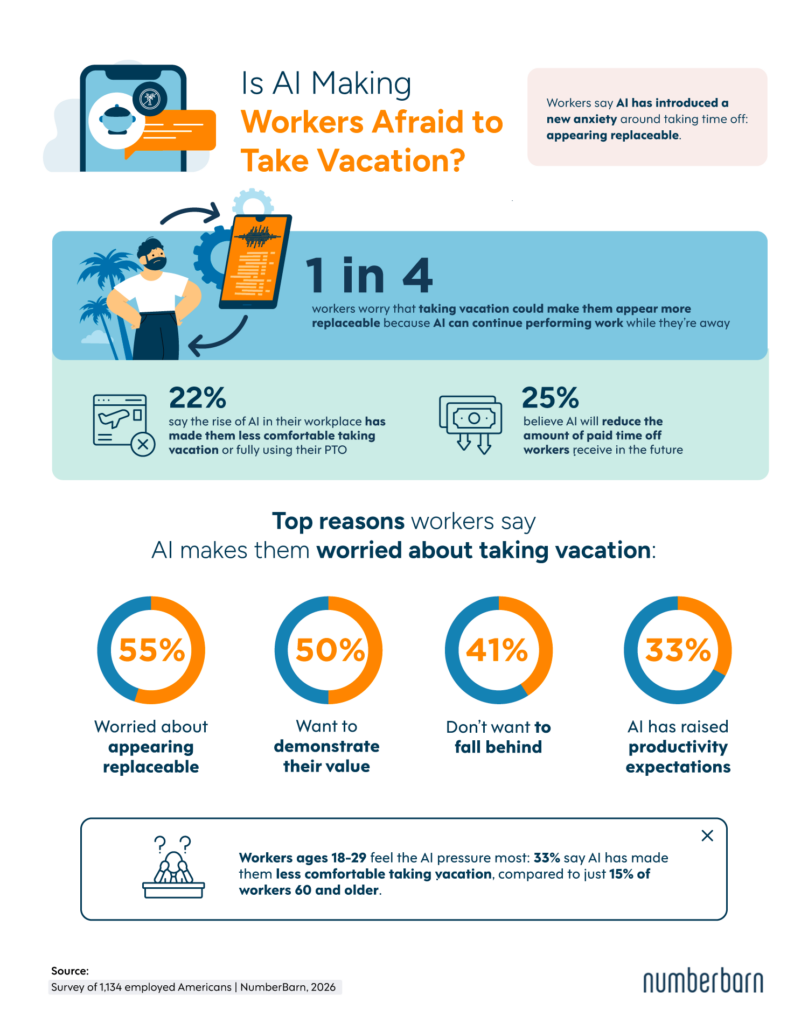
Artificial intelligence is not only changing the workplace itself, it’s also changing how some employees think about taking time off. More than one-quarter of respondents (26%) now say they worry that taking vacation could make them appear more replaceable, in part because of a perception that AI might continue performing work while they’re away.
Similarly, 22% say the growing use of AI in their workplace has made them less comfortable taking vacation, or even fully using their paid time off.
Additionally, among workers who say AI has made them less comfortable taking vacation, the most common concern is appearing replaceable (55%). Others say they feel a greater need to demonstrate their value (50%), don’t want to fall behind (41%), or believe AI has raised productivity expectations in their workplace (33%).
There’s a difference by age, too. The data also suggests younger workers are feeling these concerns most acutely. One-third (33%) of respondents ages 18 to 29 say AI has made them less comfortable taking vacation, compared to 19% of workers ages 30 to 44 and just 15.1% of workers aged 60 and older.
And skepticism around improvement runs rampant. Beyond today’s workplace, many employees also expect AI to reshape vacation policies in the future. One-quarter of workers (25%) believe AI will ultimately reduce the amount of paid time off employees receive, while 38% remain unsure. Just 37% believe AI will have no impact on future PTO benefits, which highlights the overall uncertainty many workers feel as AI continues to influence an evolving employment landscape.
Company Culture and the Pressure to Stay Connected
Staying connected during vacation isn’t simply a bad habit, it’s the result of real or perceived expectations coming from employers and workplace culture.
Most people feel pressure directly from the top. More than half of employed Americans (55%) surveyed say they feel at least some pressure from their employer, manager, or clients to remain reachable while on vacation. And while 22% say their employer has explicitly or implicitly communicated an expectation to respond while they’re away, an even larger share (34%) say staying connected is more simply “just a part of their workplace culture.”
In many cases, anxiety comes from perception. More than 4 in 10 workers (43%) say they feel pressure to stay connected because of how their employer or coworkers might perceive them if they disconnect. Similarly, 41% admit they’ve felt guilty for not responding to a work email, call, or message while on vacation.
Working while on vacation could contribute to why three-quarters of respondents (76%) say they’ve felt like they needed another vacation immediately after returning from one. For many, time away from work isn’t providing the mental reset it was intended to deliver.
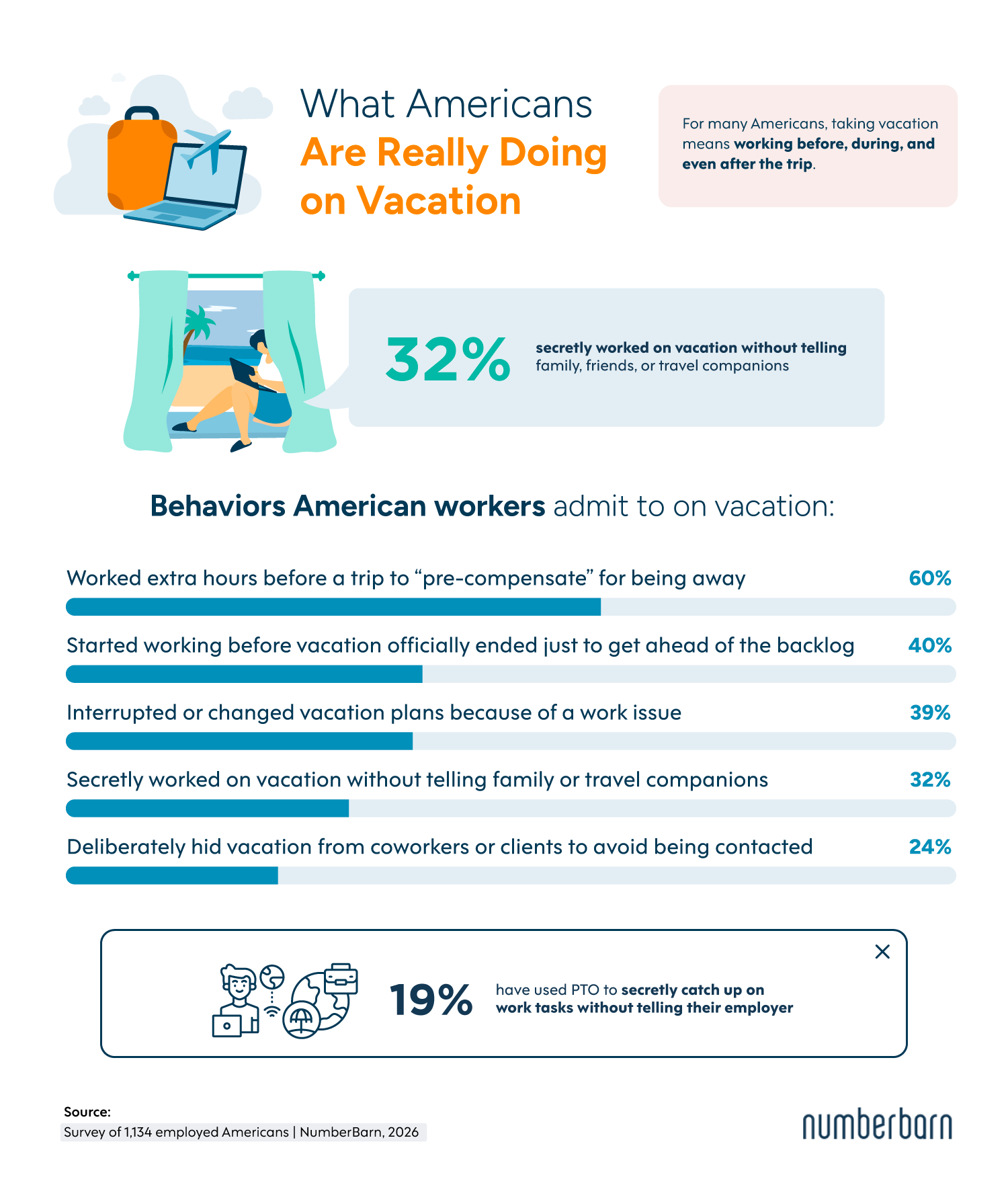
Not everyone’s caving to constant connectivity while away. Nearly one-quarter (24%) say they’ve deliberately avoided telling coworkers or clients they were going on vacation simply to reduce the chances of work-related communications.
On the other hand, nearly one-third (32%) admit they’ve secretly worked while on vacation without telling their family, friends, or travel companions. And, nearly 2 in 5 respondents (39%) say they’ve interrupted or changed vacation plans because of a work issue, including 9% who have cut a trip short entirely.
Hybrid Workers Have the Hardest Time Disconnecting
Work arrangement appears to play an important role in how easily employees unplug while on vacation. Hybrid workers were the most likely to check or respond to work communications during their most recent vacation (74%), compared to 59% of fully remote workers and 55% of fully in-person employees.
The data also suggests that disconnecting becomes more difficult as workers move into leadership roles.
Who stays online to work the most? Directors and vice presidents were the most likely to check work while on vacation (78%) and the most likely to interrupt or change vacation plans because of a work issue (63%). Managers and team leads followed closely behind, with 74% checking work during their most recent vacation.
Entry-level employees reported the lowest rates of workplace interruptions. Fewer than half (46%) checked work while away, and just 22% say they’ve interrupted vacation plans because of a work issue. Even so, concerns about the perception of disconnection aren’t limited to senior leadership, suggesting that workplace and company culture influences employees at every level of an organization.
Paid Time Off Isn’t Always Time Off
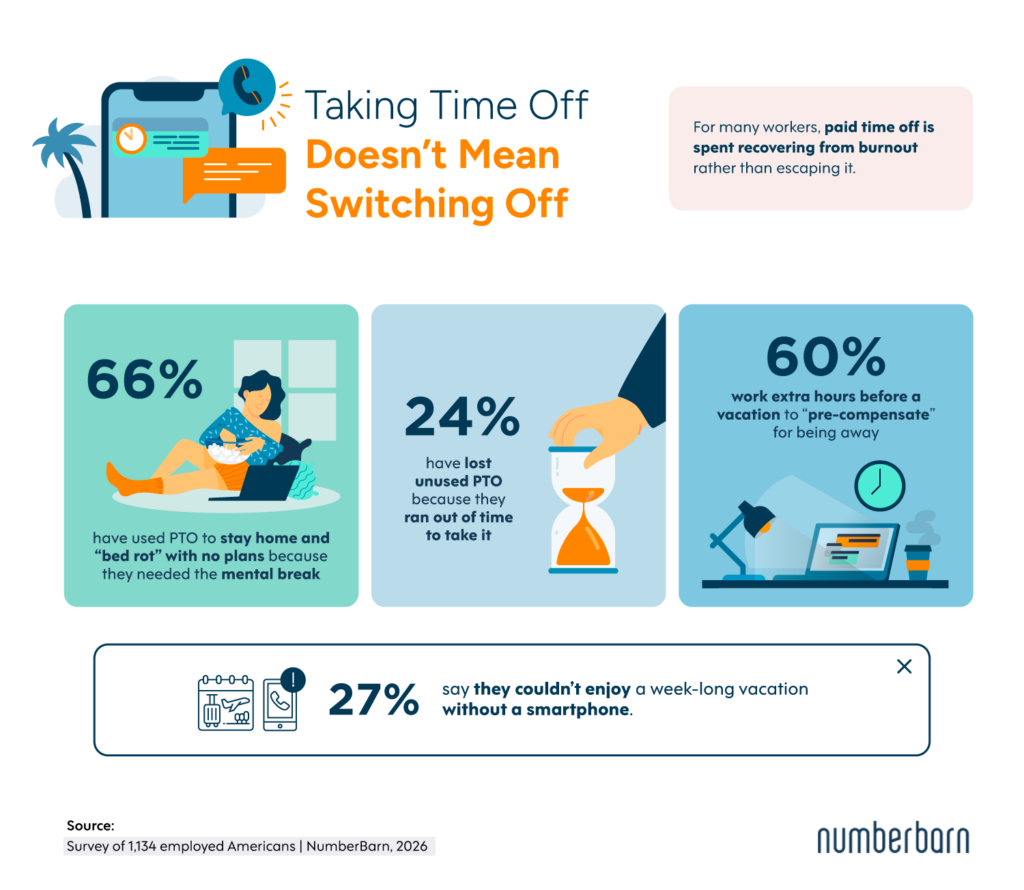
Finally, vacation doesn’t always mean boarding a plane. Increasingly, workers are using paid time off just to recover from the demands of everyday life.
Two-thirds of employed Americans (66%) surveyed say they’ve used paid time off to stay home with no plans, spending the day resting or “bed rotting” because they needed a mental break.
At the same time, nearly one-quarter (24%) report losing unused PTO because they simply ran out of time to take it, highlighting the divide between earning time off and actually being able to use it.
Technology also continues to shape how Americans perceive enjoyment. More than one-quarter of workers (27%) say they don’t believe they could fully enjoy a week-long vacation without a smartphone, suggesting that staying connected has become about more than just responding to work emails.
Social media, however, appears to play a more nuanced role. Most workers (72%) say they could easily take a vacation without posting about it online, and only 20% feel pressure to share their trips while they’re happening. At the same time, nearly half (42.5%) say they’ve intentionally avoided posting vacation photos or mentioning a trip on social media specifically to reduce the chances of work-related engagement.
Whether it’s workplace expectations, the pressure to stay reachable, concerns about replacement via emerging technologies like AI, or simply the inability to step away from smartphones, these findings suggest that paid time off often comes with new forms of stress rather than relief. As technology continues to mold how Americans work, learning how to truly disconnect may become just as important as taking vacation itself.
Methodology
In June 2026, NumberBarn surveyed 1,134 employed Americans to better understand how workers experience vacation, paid time off (PTO), workplace connectivity expectations, and the growing influence of artificial intelligence on workplace behaviors and attitudes toward taking time off.
To qualify, respondents had to be currently employed, including full-time employees, part-time employees, and self-employed workers or independent contractors. Respondents answered a series of questions about their vacation habits, work communication while on vacation, employer expectations, PTO usage, social media behaviors, and perceptions of AI in the workplace.
Demographics
The survey sample included a diverse cross-section of employed Americans:
Employment: 69% full-time employees, 19% part-time employees, and 12% self-employed, freelancers, or independent contractors.
Gender: 55% female, 44% male, and 1% identified as non-binary or another gender identity.
Average age: 40
Work arrangement: 50% in-person, 29% hybrid, and 21% fully remote.
Seniority: 34% mid-level or individual contributors, 26% managers or team leads, 15% entry-level employees, 18% senior or specialist roles, 7% business owners or founders.
Household income: 21% earned between $50,000 and $74,999 annually, 21% earned between $100,000 and $149,999, 18% earned between $75,000 and $99,999, 14% earned between $30,000 and $49,999, 14% earned $150,000 or more, and 12% earned less than $30,000 annually.
Fair Use
When using this data and research, please attribute by linking to this study and citing https://www.numberbarn.com .
Media Inquiries
For media inquiries, contact media@numberbarn.com