
Seattle didn’t end up with multiple area codes overnight. It just… kept growing.
Tech companies moved in. Startups followed. People showed up from everywhere. And eventually, so did more phones than one area code could handle. (Yes, this is a story about phone numbers. Stay with me.)
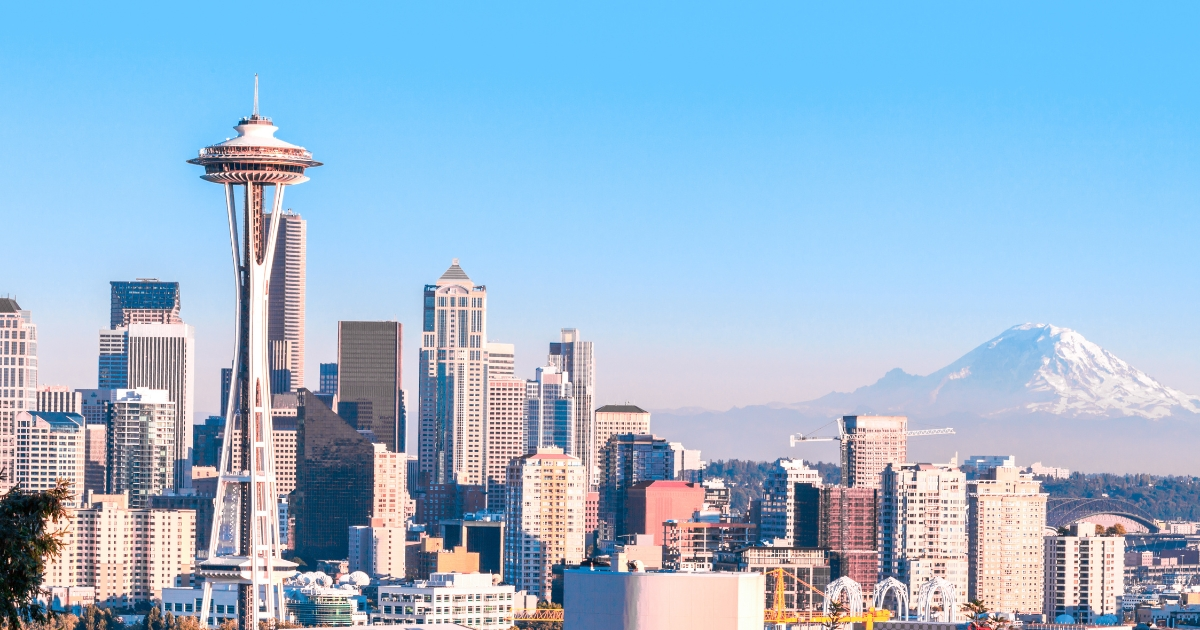
Today, Seattle uses three main area codes: 206, 425, and 253, each covering a different slice of the metro.
Unlike most cities that just stacked area codes like pancakes (also known as overlays), Seattle split them by geography, which means where you are often tells you which area code you’ve got (not perfectly, but more than you’d expect.)
In this guide, we’ll break down:
- Which Seattle area codes exist today.
- What each area code covers (and why).
- Which neighborhoods and cities fall where.
- How to get a Seattle phone number if you need one.
Let’s get into it.
- What Are the Seattle Area Codes?
- 206 Area Code (Seattle Core)
- 425 Area Code (Eastside & Tech Hub)
- 253 Area Code (Tacoma & South Sound)
- Why Does Seattle Have Multiple Area Codes?
- Seattle Neighborhood Guide
- How to Get a Seattle Phone Number
- So, Which Seattle Area Code Should You Choose?
What Are the Seattle Area Codes?
Seattle runs on:
- 206
- 425
- 253
Here’s the short version of how Seattle area codes got here: the entire state of Washington used to share just one area code (206). That was fine in 1947, when nobody had a phone in their pocket, and less fine by the early 2000s, when everyone did.
So in 1997, regulators did something kind of elegant: instead of stacking a new code on top of 206, they split the territory. Divided the slices before anyone could fight over them.
- 206 stayed with Seattle
- 425 went to the Eastside
- 253 covered the South
Neat, right?
206 Area Code (Seattle Core)
If Seattle had a “main character” area code, it’s this one.
206 is old. We’re talking 1947, one of the original codes in the North American Numbering Plan. It used to cover the whole state of Washington, which is a lot of territory for one little number. Over time, as the region grew and the split happened, the geographical boundaries for 206 narrowed down to Seattle itself.
Today, 206 is home to neighborhoods like:
- Downtown Seattle
- Capitol Hill
- Ballard
- Queen Anne
- Fremont
- University District
- West Seattle
This is the Seattle area code in the cultural sense. The one people mean when they say “Seattle number.” For businesses especially, a 206 number carries a kind of local credibility: it says we’ve been here, we’re from here, we’re not going anywhere.
425 Area Code (Eastside & Tech Hub)
Cross Lake Washington and things start to feel different.
The 425 area code was born in 1997 as part of the geographic split, and it landed squarely on the Eastside, which, as it turns out, was about to become one of the most tech-dense corridors in the country. (Talk about good timing!)
Cities in the 425 area include:
- Bellevue
- Redmond
- Kirkland
- Issaquah
- Sammamish
If 206 is classic Seattle, 425 is Seattle’s expansion pack. It’s where the tech campuses are, where a lot of the growth happened, and where there’s a very good chance your neighbor works at Microsoft.
253 Area Code (Tacoma & South Sound)
Head south, and you’re in 253 territory.
Also born in 1997 alongside 425, the 253 covers the southern end of the metro, centered around Tacoma, which honestly deserves more credit than it gets.
Cities in 253 area code:
- Tacoma
- Federal Way
- Auburn
- Puyallup
- Gig Harbor
253 feels more regional than the other two, but it’s still very much part of the greater Seattle ecosystem.
Why Does Seattle Have Multiple Area Codes?
Okay, quick numbers lesson.
Under the North American Numbering Plan, each area code can technically support around 7.9 million numbers. That sounds like plenty until you account for:
- Population growth
- Mobile phones (everyone has one, most people have two)
- Business lines
- Fax machines (yes, still)
- IoT devices, smart meters, and other things that apparently also need phone numbers now
By the 1990s, demand was outpacing supply, and that’s basically how Seattle ended up with three different area codes.
Seattle Neighborhood Guide
- Downtown Seattle (206): The commercial core. Classic 206.
- Capitol Hill (206): Nightlife, culture, strong opinions about coffee. Also 206.
- Ballard (206): Once industrial, now very much a place where brunch takes 45 minutes to get a table. Still 206.
- Queen Anne (206): Residential, slightly polished, great views. 206.
- Bellevue (425): Across the lake, firmly 425. Major player in the region’s business scene.
Why Seattle Area Codes Matter for Local Businesses
Area codes, besides being a technical thing, are a trust signal.
People are more likely to answer calls from numbers that look local. It’s a small psychological thing, but it’s real, and it compounds over time.
In the Seattle area, the codes carry identity:
- 206 → established, Seattle-core
- 425 → Eastside, tech-adjacent
- 253 → South Sound, regional
Pick the one that fits where you’re operating, who you’re calling, and what impression you want to leave.
How to Get a Seattle Phone Number
Guess what? You don’t have to live in Seattle (or anywhere near it) to have a Seattle number.
You can use a virtual or secondary phone number, which allows you to use a local area code from basically anywhere. Virtual numbers are perfect for digital nomads, or expanding your brand but keeping its local roots.
Here’s all it takes:
- Search available numbers – Browse what’s out there and pick a Seattle number.
- Choose your area code – 206, 425, or 253 depending on your needs.
- Set it up – Activate and forward calls to any number, no matter where you are.
Genuinely straightforward.
So, Which Seattle Area Code Should You Choose?
Three codes. Three identities. One decision.
- 206 if you want classic Seattle: the name recognition, the local credibility, the “we’re from here” energy.
- 425 if you’re working on the Eastside or want to signal tech-corridor relevance.
- 253 if the South Sound is your market and you want to feel like a neighbor, not a caller ID mystery.
All three work exactly the same under the hood. The difference is what they say… and in a world where everyone lets unknown numbers go to voicemail, a local number still matters more than people think.
Browse available Seattle numbers. Your future area code is waiting.